
Machine vision needs stable material
Inspection systems perform better when the web is not drifting, wrinkling or stretching through the inspection zone.
Home / Industrial Automation Blog
AI adoption in packaging is moving from pilot projects into practical machine functions. For roll-to-roll equipment, that makes stable web position, clean sensor feedback and reliable tension data more important than ever.
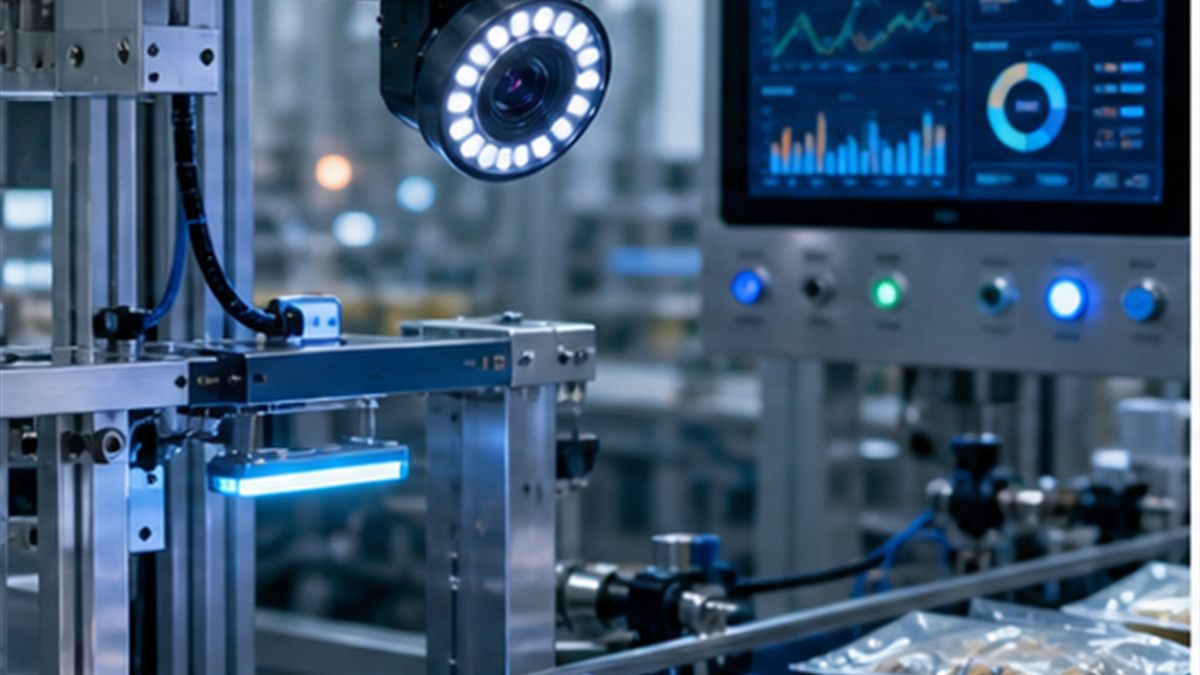
Machine vision, predictive maintenance and operator decision support are strongest when the underlying web handling process delivers clean, repeatable signals.
Recent packaging industry research points to a more practical phase of automation investment. PMMI reports that AI is being applied to machine vision, predictive maintenance, operator knowledge transfer, compliance workflows and data transparency. Packaging World also notes that many manufacturers are making automation decisions around cost, labour constraints, risk reduction and deployment practicality.
Inspection systems perform better when the web is not drifting, wrinkling or stretching through the inspection zone.
Tension sensors, edge sensors and actuator feedback can reveal process changes before scrap or downtime increases.
AI-assisted interfaces still rely on well-designed controllers, alarms and repeatable machine setup.
AI does not remove the need for accurate mechanical control. It increases the value of reliable field data. A packaging line that uses machine vision to detect print defects, seal issues or web wander still needs consistent tension and accurate edge guidance to keep the process repeatable.
KRD Automation supplies controllers, sensors and actuators used in packaging and converting lines that are moving toward smarter inspection and higher automation.
No. AI can improve monitoring and decision support, but stable web handling still depends on controllers, sensors, actuators and mechanical setup.
The most practical areas are defect detection, predictive maintenance, operator training and production data analysis.
They should design machines with clean sensor signals, documented control zones and accessible data from key web handling components.
AI and machine vision are changing packaging equipment, but stable web handling remains the foundation. Predictive analytics can identify drift or abnormal process conditions, yet the line still needs reliable sensors, actuators and tension control to make physical corrections.
For packaging OEMs, the practical path is usually incremental: improve sensor data, stabilize tension and guiding loops, then add monitoring or analytics. Better control hardware makes downstream automation data more consistent and more useful.
KRD Automation reviews the complete machine context before recommending components. Important details include web width, material type, line speed, control zone, available installation space, required correction accuracy and whether the project is a new OEM build or a retrofit. This approach helps avoid over-specifying one part while missing the practical limit in another part of the control loop.
For a customized recommendation, share drawings, photos or short videos of the machine section. KRD can help compare tension controllers, load cells, EPC controllers, ultrasonic or photoelectric sensors, linear actuators and integrated web guiding units for the application.
For any roll-to-roll control project, the best recommendation starts with process data. Useful information includes web width, material thickness, substrate type, line speed, roll diameter, control zone, required accuracy and the machine section where the problem appears. Photos of the web path, sensor mounting area and actuator location are often more useful than a model number alone because they show the real mechanical constraints.
It is also important to describe the defect in production language. Examples include edge wander, wrinkles after acceleration, unstable unwind tension, poor rewind hardness, hunting guide movement, sensor loss on transparent film, inconsistent slitting edge or registration drift. These symptoms help identify whether the issue is mainly sensing, control logic, actuator sizing, mechanical alignment or tension stability.
One common mistake is selecting a controller without confirming the feedback method. Another is choosing a sensor based only on catalogue type instead of testing the actual material. A third is undersizing the actuator or brake because the machine speed, roll inertia or guide load was not considered. In industrial environments, stable performance usually comes from matching the full loop: sensor, controller, actuator, mechanics and operator interface.
For North American OEM and converter projects, serviceability also matters. Wiring should be clear, calibration should be repeatable and operators should be able to understand alarm conditions quickly. A solution that is easy to install and maintain often creates more value than a more complex system that is difficult to support on the production floor.
Contact KRD when a machine requires a new tension controller, web guide controller, sensor, actuator or integrated EPC unit, or when an existing line is producing waste that appears related to web tension or lateral alignment. KRD can review the application and suggest a practical product family for printing, packaging, film, foil, label, nonwoven or lithium battery material production.
Before purchasing equipment, document the current machine condition and the expected improvement. Record where the web becomes unstable, whether the issue appears during startup or steady operation, and whether the problem changes with material, roll diameter or speed. This information helps separate a control issue from a mechanical alignment issue.
Next, confirm the installation constraints. Check the available panel space, sensor mounting distance, roller layout, actuator mounting position, cable routing and whether the machine already has PLC input or output requirements. Many successful retrofit projects depend on these mechanical and electrical details being reviewed before the product is ordered.
Finally, define how success will be measured. Examples include lower startup scrap, reduced edge trim, more consistent rewind quality, fewer web breaks, faster changeover or improved registration stability. When the success metric is clear, it is easier to choose the right level of control instead of overbuilding or underbuilding the system.
Share your material, web width, line speed and control challenge. We can help match tension control and web guiding components for your packaging equipment.